Manuscripts & Texts

Ge'ez Manuscripts

Ethiopia possesses one of the richest manuscript traditions in the world. Geez manuscripts have been produced continuously for over 1,600 years, making them among the oldest surviving hand-written books in any language.

These manuscripts are primarily held in churches, monasteries, and national archives across Ethiopia and Eritrea, with significant collections also at the British Library, Bibliothèque nationale de France, and the Vatican Library.

Process of Writing a Ge'ez Manuscript

  1. Preparation: Parchment (branna) is made from animal skin, cleaned, stretched, and polished for writing.
  2. Layout: Pages are ruled with lines and margins to guide the scribe (ṣāḥafi).
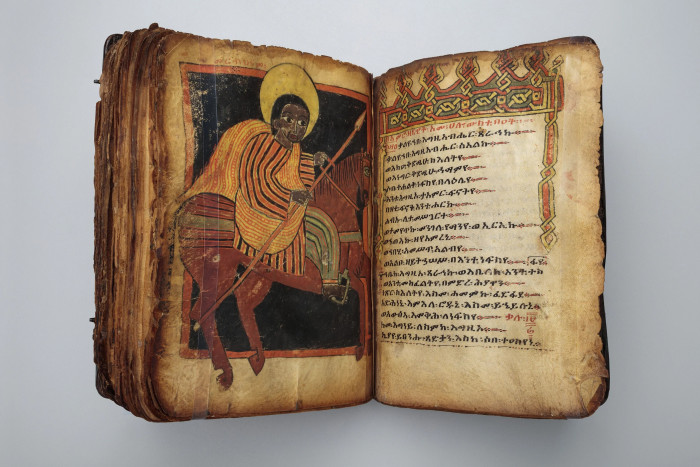
  3. Decoration: Manuscripts may include decorated crosses (mäskäl) and artistic designs.
  4. Ink Use: Black ink is used for the main text, while red ink highlights sacred names and titles.
  5. Writing: The text is written in the Geʽez script (fidäl) from left to right using a reed pen (qalam) and ink.
  6. Binding: The pages are sewn together and covered with wooden boards and leather.
  7. Preservation: Manuscripts are carefully kept in churches and monasteries for protection.

Categories of Texts

Religious Texts

Garima Gospels I

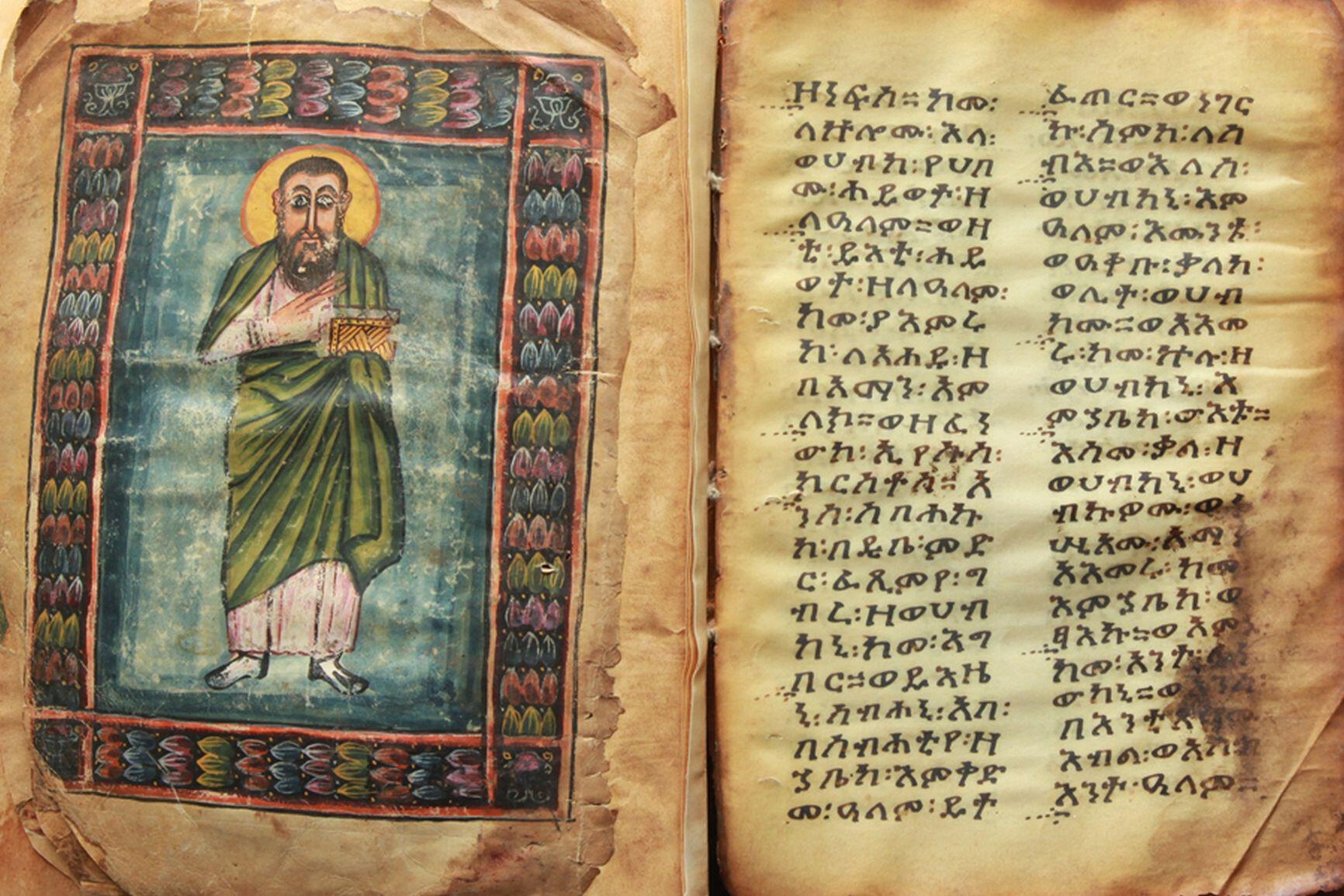
Garima I is a complete Gospel manuscript consisting of approximately 400 pages of text. It is especially notable for its elaborate decoration, including ten beautifully designed illuminated pages that demonstrate a highly developed artistic tradition. The style of illustration reflects early Christian artistic influences while also showing a distinct Ethiopian identity in manuscript design.

Garima Gospels II

Garima II is another complete Gospel manuscript of similar length, containing around 400 pages of text. However, its version of the Gospel text differs noticeably from Garima I, suggesting that the translation tradition had already been revised or existed in multiple forms during that period.

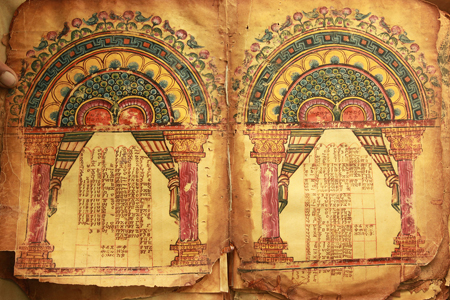
Artistically, Garima II shows influences from Coptic Christian art traditions, especially in its evangelist portraits and decorative canon tables. These features suggest cultural and artistic exchange between Ethiopia and other Christian regions, particularly Egypt.

Synaxarium (ስንክሳር)

The Synaxarium is a religious text used in the Ethiopian Orthodox Tewahedo Church to commemorate saints, martyrs, and holy events each day of the church calendar. It contains short religious stories that highlight the lives, miracles, and struggles of saints as examples of faith and holiness.

Historical Texts

The Kebra Nagast (Glory of Kings)

The Kebra Nagast is a 14th-century Ethiopian national epic written in Ge'ez that chronicles the Solomonic dynasty, tracing its origins to King Solomon and the Queen of Sheba. It narrates how their son, Menelik I, brought the Ark of the Covenant to Ethiopia, establishing the nation as the new guardian of Zion.

Royal Chronicles

Royal Chronicles are a series of Ge'ez-language documents compiled by court historians that document the reigns, military campaigns, and divine legitimacy of Ethiopian emperors, primarily from the 14th to early 20th centuries.

Literary Works

Angarä fälasfa (አንጋረ ፈላስፋ)

Angarä fälasfa is a philosophical and didactic text whose title is often understood as “Sayings of the Philosophers.” It is a collection of wise sayings, moral teachings, and philosophical reflections attributed to ancient thinkers. The work was used mainly for education and moral instruction, helping readers develop wisdom, ethical behavior, and critical thinking.

The work presents short, thoughtful teachings about life, morality, and human behavior. It uses concise and symbolic language to express deep ideas, often guiding readers on how to live wisely and ethically.

It is considered both a literary and philosophical text, and it reflects the rich intellectual tradition of Ethiopia and Eritrea, where religion, wisdom, and philosophy are closely connected.

Preservation

Manuscripts have been preserved in monasteries and churches across Ethiopia for centuries. Modern digitization efforts by institutions like the Hill Museum & Manuscript Library (HMML) and the Ethiopian Manuscript Imaging Project are working to preserve these treasures for future generations.