AutoCore
Prelude
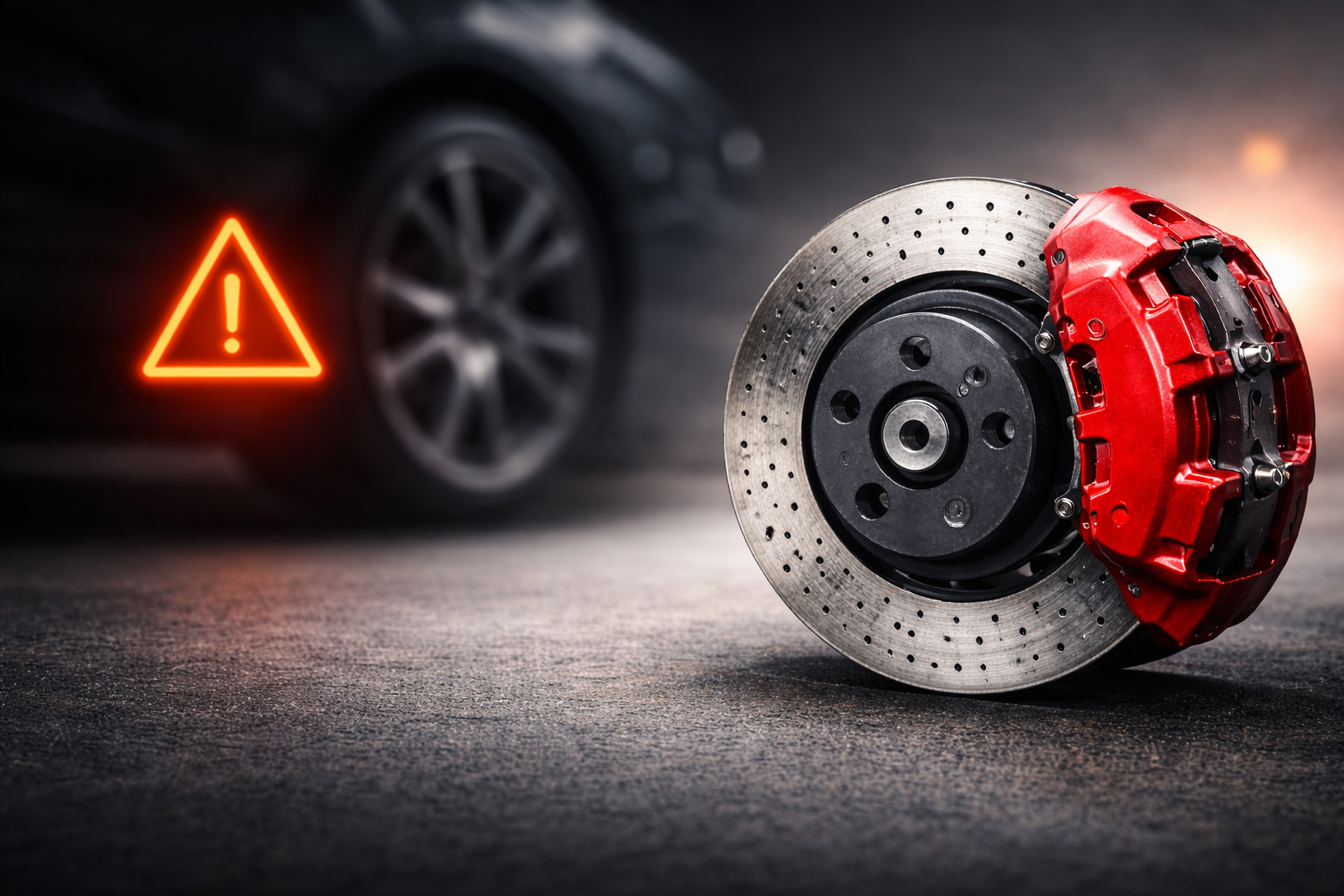
Brake safety is the condition in which a vehicle’s braking system functions properly and reliably, allowing the driver to slow down or stop the vehicle effectively under all driving conditions. It involves ensuring that all brake components—such as brake pads, discs (rotors), calipers, and brake fluid—are in good working condition so that the vehicle can respond quickly and safely when the brake pedal is applied. Brake safety also includes regular inspection, maintenance, and timely replacement of worn or damaged parts to prevent brake failure.
Maintenance and Procedures
To maintain brake safety, regular inspection and maintenance of the entire braking system are essential. The brake system is one of the most critical safety components in any vehicle, as it allows the driver to control speed and bring the vehicle to a complete stop when necessary. Key parts such as brake pads, brake discs (rotors), calipers, brake fluid, and the master cylinder must always be in proper working condition. Over time, these components are subject to wear and tear due to constant friction, heat, and pressure. For example, brake pads gradually wear down as they press against the rotating discs to slow the vehicle, and if they become too thin, they can reduce braking efficiency and even damage the discs. In addition, brake fluid plays a vital role in transmitting the force from the brake pedal to the braking components. If the brake fluid level is low, contaminated, or has absorbed moisture, it can lead to a spongy brake pedal feel or even brake failure in extreme cases. Similarly, worn or warped brake discs can cause vibrations or reduced stopping power, while faulty calipers may prevent the brake pads from properly gripping the discs.
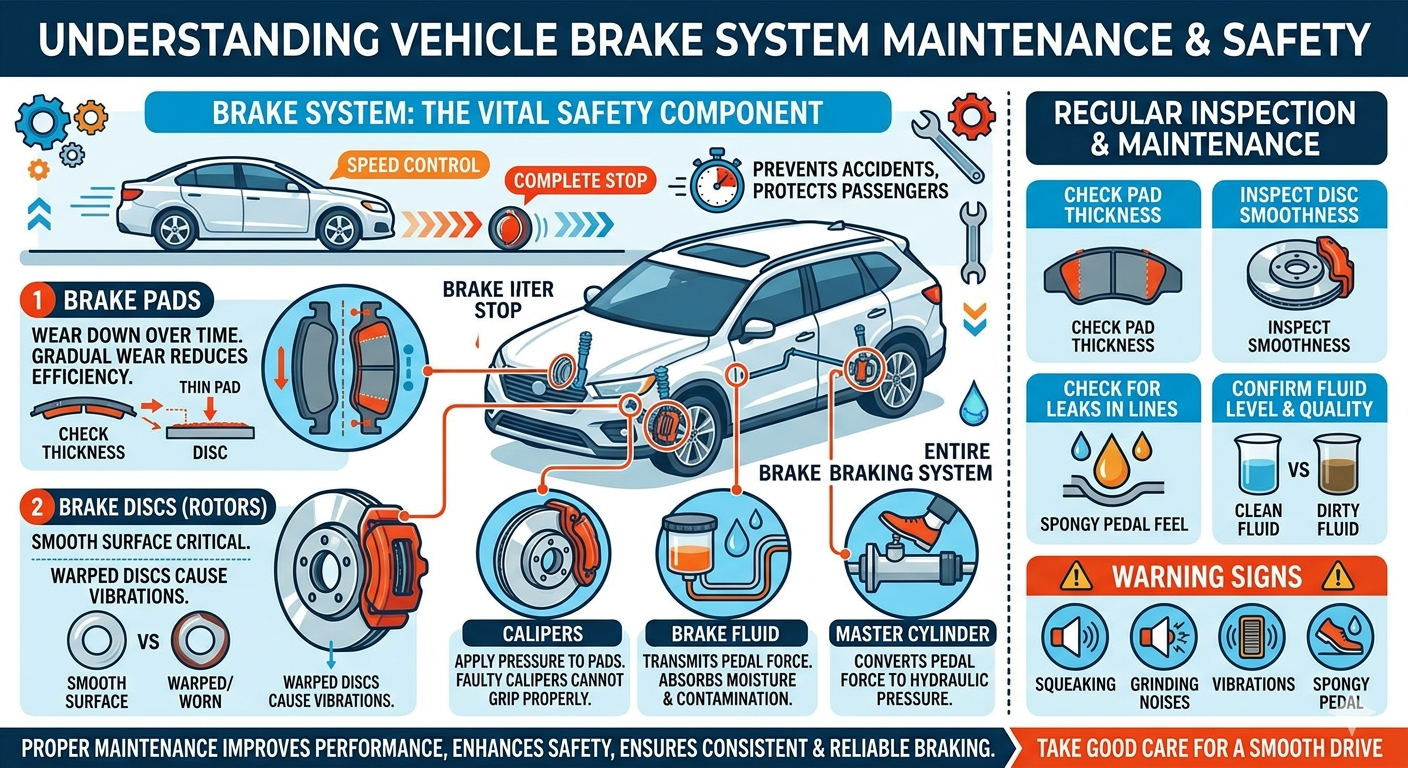
Regular checks should include inspecting the thickness of brake pads, ensuring the discs are smooth and not excessively worn, checking for leaks in the brake lines, and confirming that the brake fluid is clean and at the correct level. It is also important to listen for unusual sounds such as squeaking or grinding, as these can be early warning signs of brake problems. Ignoring these signs can lead to more serious issues and increased repair costs. Proper maintenance not only improves the performance of the braking system but also enhances overall vehicle safety. By replacing worn-out components on time and keeping the system clean and well-lubricated, drivers can ensure consistent and reliable braking under all driving conditions. In conclusion, taking good care of the brake system is essential for preventing accidents, protecting passengers, and ensuring a smooth and safe driving experience at all times.