AutoCore
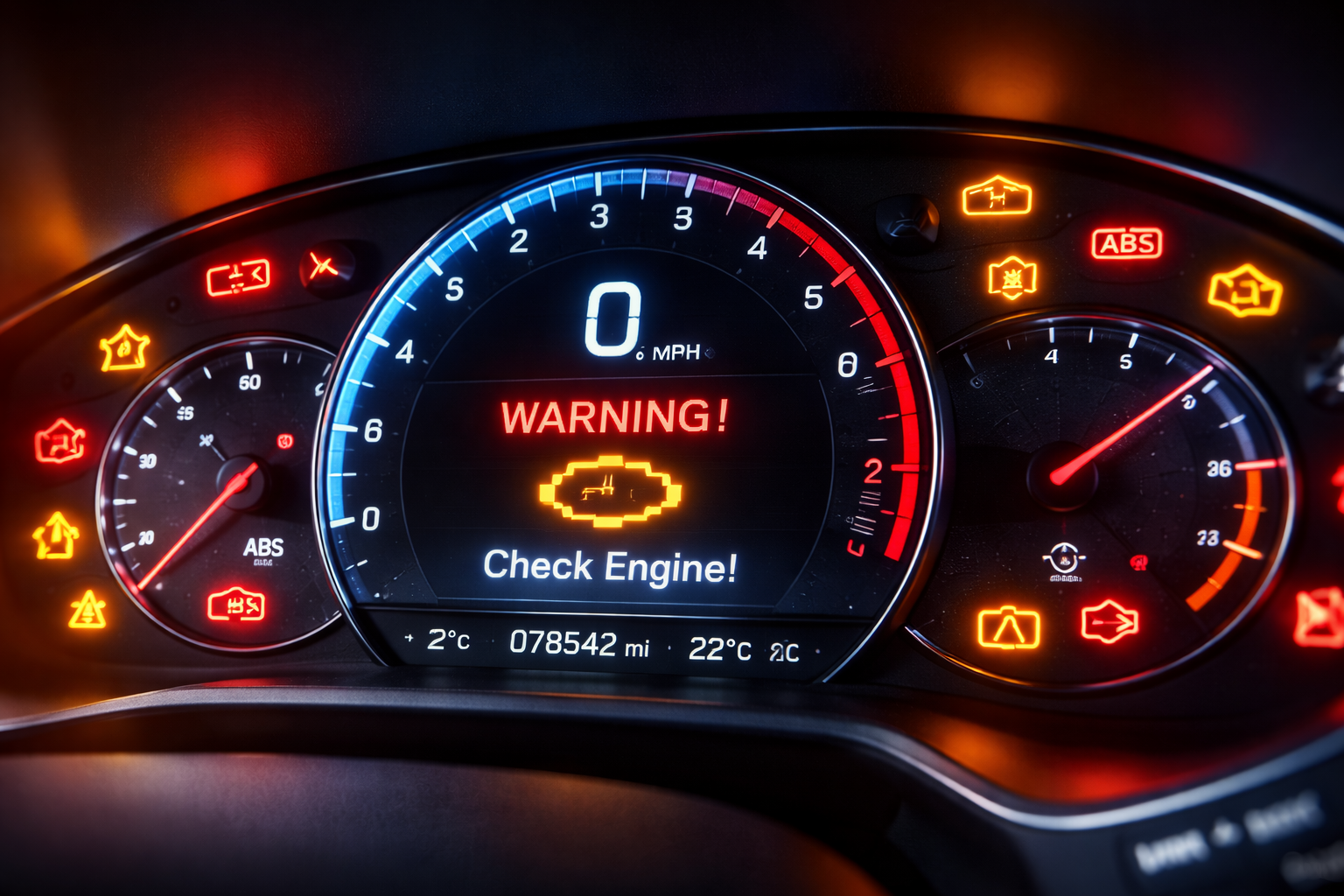
Dashboard Warning Lights
Dashboard warning lights are important indicators that inform the driver about the condition of different vehicle systems. These lights appear on the dashboard when there is an issue or when a specific system needs attention. They are designed to provide quick and clear signals so the driver can take action before a small problem becomes a serious one. Understanding these warning lights is essential for safe and efficient vehicle operation.
There are several types of warning lights, each representing a different system in the vehicle. For example, the engine warning light may indicate a problem with the engine, while the battery light signals an issue with the electrical system. The brake warning light shows a problem with the braking system, and temperature lights warn about overheating. Each symbol has a specific meaning, helping the driver quickly identify which part of the vehicle needs attention.
→These warning lights will be explained in more detail in the video.
What to Do When a Warning Light Appears
When a warning light turns on, it is important not to ignore it. The driver should check the vehicle manual to understand the meaning of the symbol and take appropriate action. Some warnings may require immediate attention, such as stopping the vehicle safely, while others may allow the driver to continue driving with caution. Regular maintenance and quick response to warning lights help prevent damage and ensure the vehicle remains safe and reliable.