AutoCore
Exhaust System Overview: Function, Components, and Importance
An exhaust system is a crucial component of a vehicle that is responsible for directing harmful gases produced by the engine safely away from the cabin and into the atmosphere. It plays a key role in improving engine efficiency, reducing emissions, and ensuring a quieter and smoother driving experience. Without a properly functioning exhaust system, engine performance can drop significantly, and harmful gases such as carbon monoxide could enter the vehicle interior, posing serious health risks. The system works by collecting exhaust gases from the engine’s combustion chambers and guiding them through a series of connected parts designed to control flow, reduce noise, and treat emissions. As gases travel through the system, they are filtered and processed to minimize environmental impact. This process not only helps in meeting emission regulations but also contributes to better fuel efficiency and overall engine performance.
Several important components work together within the exhaust system to ensure proper operation. These include the exhaust manifold, catalytic converter, muffler, resonator, oxygen sensors, and exhaust pipes. Each part has a specific function, such as converting harmful gases into less harmful substances, reducing engine noise, monitoring oxygen levels for optimal fuel combustion, and safely channeling gases out of the vehicle. In addition to emissions control, the exhaust system significantly affects vehicle sound and performance. It helps reduce the loud noises produced during combustion while maintaining the right level of back pressure needed for efficient engine operation. A balanced exhaust flow ensures that the engine breathes properly, which can improve power output and fuel economy. Over time, exhaust systems can be affected by heat, corrosion, and road debris, making regular inspection and maintenance essential. Issues such as leaks, rust, or faulty sensors can lead to reduced performance, increased emissions, and noise problems. Proper care ensures the system remains efficient, environmentally friendly, and reliable throughout the vehicle’s lifespan.
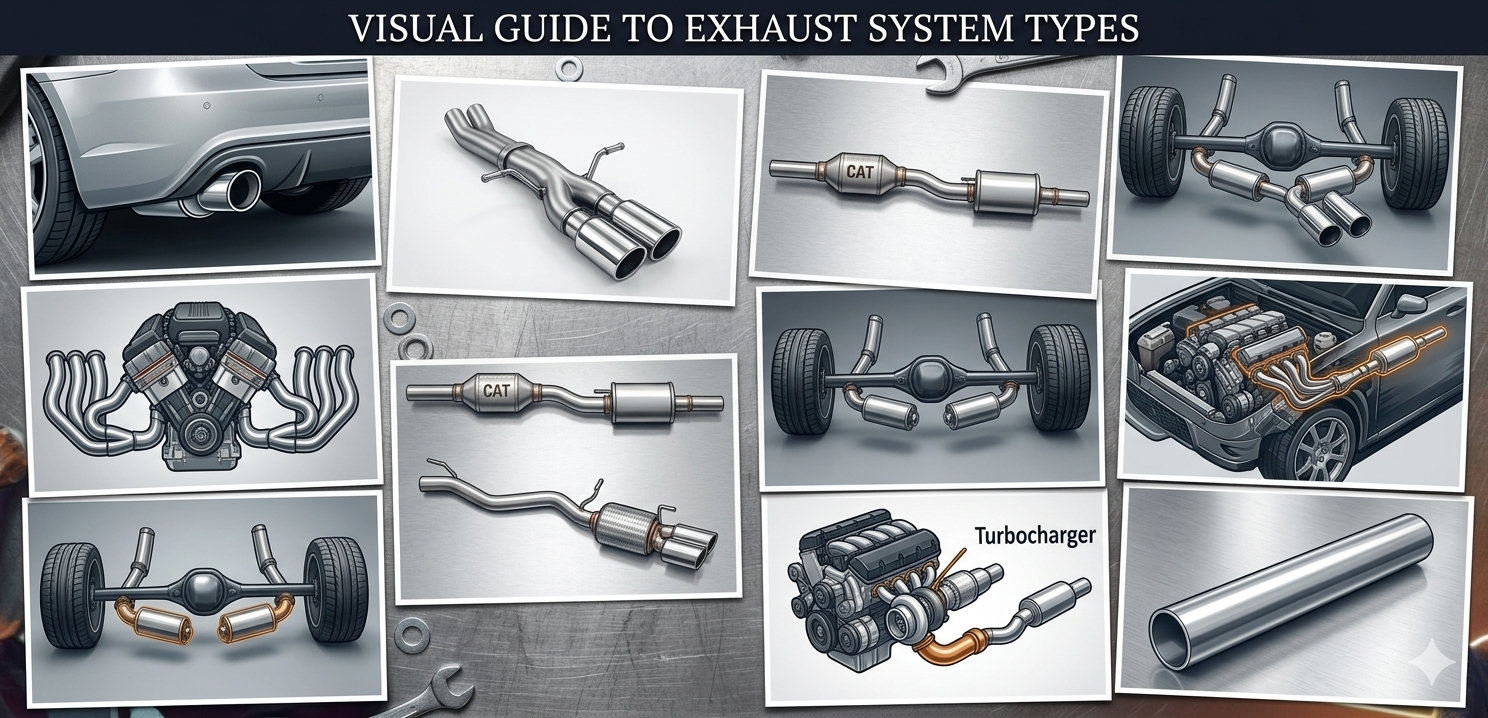
| System Type | Description | Key Features | Advantages | Disadvantages |
|---|---|---|---|---|
| Single Exit Exhaust | Uses one pipe to release exhaust gases | One outlet, simple design | Cheap, lightweight, easy to maintain | Limited performance, less efficient airflow |
| Dual Exit Exhaust | Has two exhaust outlets (not necessarily two full systems) | Split at the rear | Better appearance, slightly improved airflow | Heavier, more expensive than single exit |
| True Dual Exhaust | Two separate exhaust systems from engine to tailpipes | Independent pipes for each cylinder bank | Best performance, improved power & efficiency | Expensive, complex, heavier |
| Cat-Back Exhaust System | Replaces components from catalytic converter to tailpipe | Includes muffler, pipes, tips | Improves sound and performance, easy upgrade | Doesn’t maximize full engine potential |
| Axle-Back Exhaust System | Replaces only components after the rear axle | Mostly muffler and tailpipe | Affordable, enhances sound | Minimal performance gain |
| Header-Back Exhaust System | Replaces entire exhaust system from engine headers | Full system upgrade | Maximum performance increase | Very expensive, difficult installation |
| Turbo-Back Exhaust System | Used in turbocharged vehicles, from turbo to tailpipe | Includes downpipe and all piping | Best for turbo performance, increases power | Expensive, may not be street legal in some areas |
| Straight Pipe Exhaust | No muffler or catalytic converter | Direct pipe from engine to exit | Maximum airflow, loud sound | Illegal in many areas, very noisy, high emissions |