AutoCore
Cooling System
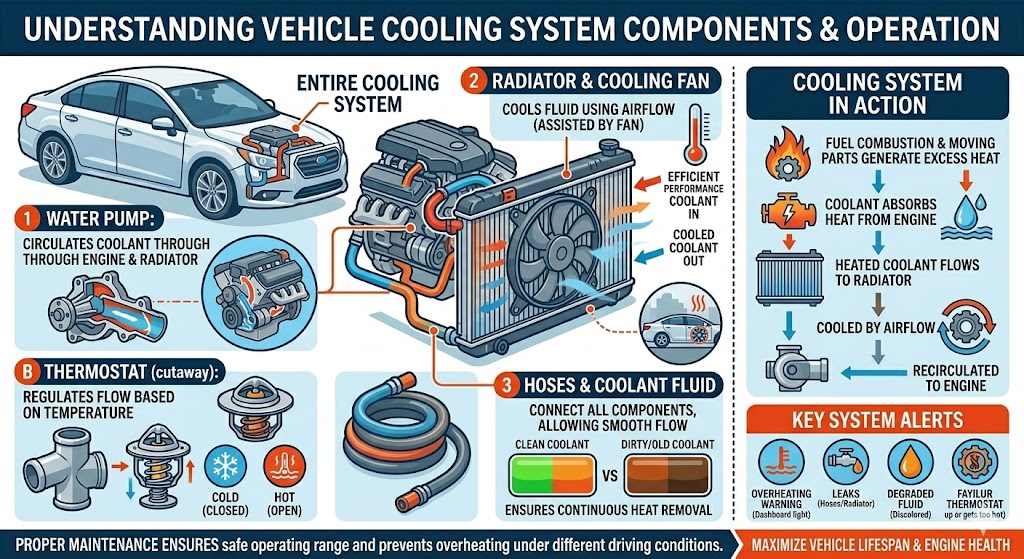
The cooling system is an essential part of a vehicle that regulates the engine’s temperature and prevents it from overheating. As the engine runs, it generates a large amount of heat due to fuel combustion and moving parts. The cooling system works by circulating coolant through the engine, where it absorbs excess heat and carries it away. This heated coolant then flows to the radiator, where it is cooled by air before being recirculated back into the engine. By maintaining an optimal temperature, the cooling system ensures efficient engine performance, prevents damage to engine components, and improves the overall lifespan of the vehicle.
Components and Operation
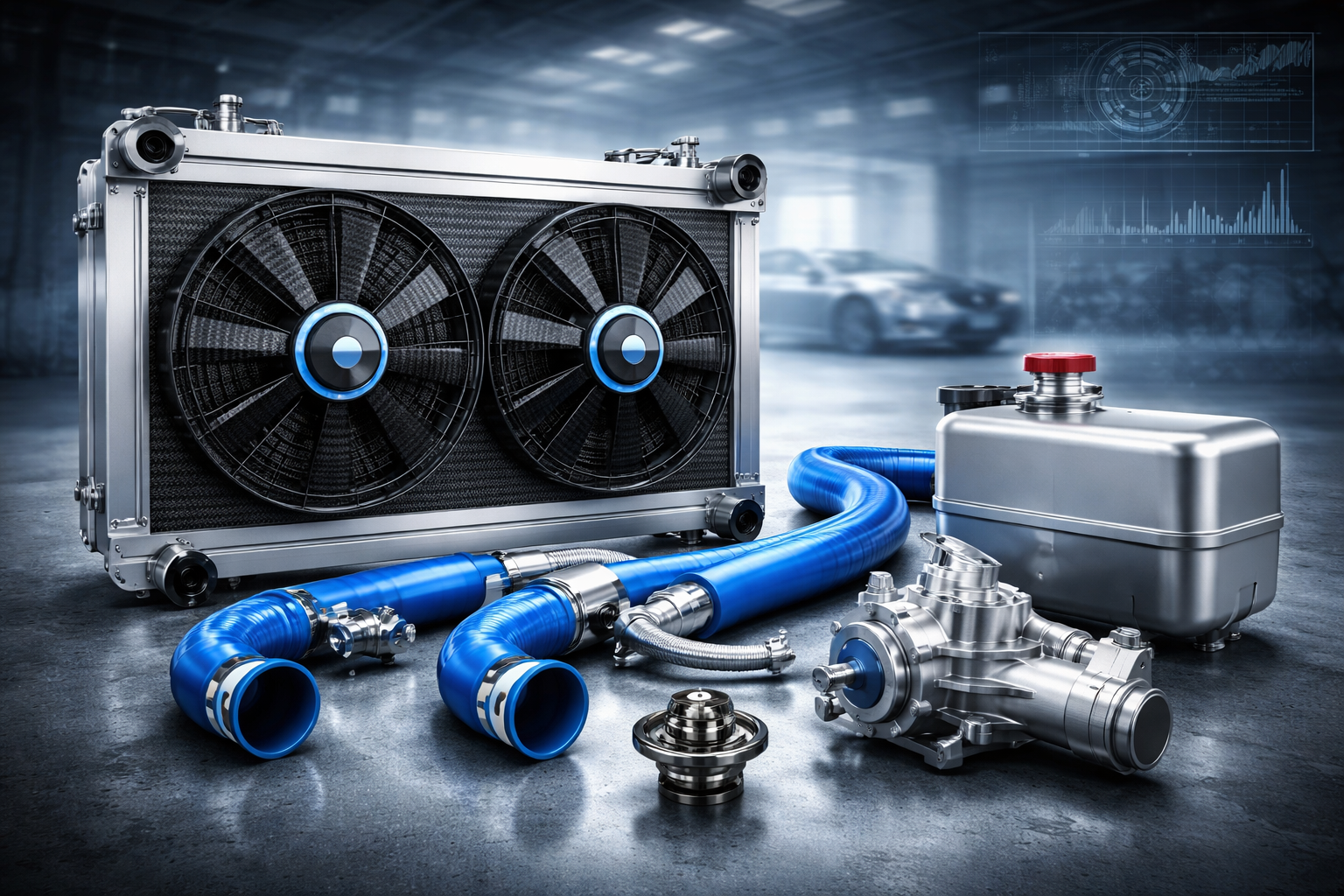
The cooling system is made up of several key components that work together to control engine temperature. These include the radiator, water pump, thermostat, cooling fan, hoses, and coolant fluid. The water pump circulates coolant through the engine and radiator, while the thermostat regulates the flow based on temperature, opening when the engine gets too hot. The radiator cools the fluid using airflow, often assisted by a cooling fan when the vehicle is stationary or moving slowly. Hoses connect all components, allowing smooth coolant flow throughout the system. Together, these parts ensure that heat is continuously removed from the engine, keeping it within a safe operating range and preventing overheating under different driving conditions.