AutoCore
Introduction
The suspension system is a key part of a vehicle that connects the wheels to the main body. Its primary purpose is to absorb shocks from the road, maintain tire contact with the surface, and provide a smooth and stable ride. It also helps improve vehicle control, especially during braking, turning, and driving on uneven terrain. The suspension system works by combining springs and shock absorbers to manage movement between the wheels and the vehicle body. When a car encounters a bump or pothole, the springs compress to absorb the impact, while shock absorbers control how quickly they return to their original position. This prevents excessive bouncing and keeps the tires firmly in contact with the road. In addition, the suspension system helps distribute the vehicle’s weight evenly, improving traction and handling. It reduces vibrations felt inside the car, making rides more comfortable. It also works closely with the steering and braking systems to maintain stability, reduce body roll during turns, and prevent excessive forward tilt during braking. Overall, the suspension system plays a vital role in ensuring comfort, control, and safety while driving.
Components
- Springs:
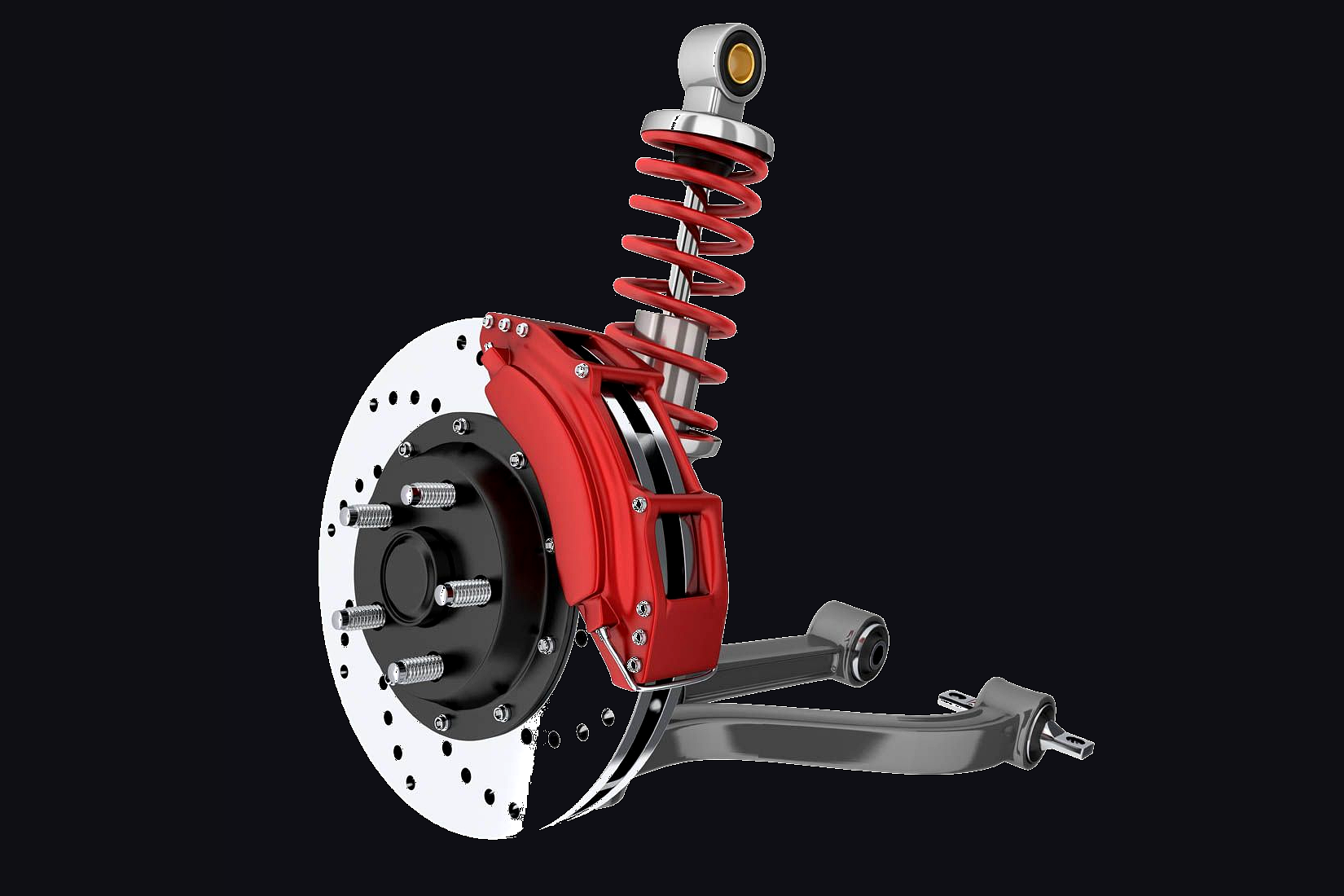
support the weight of the vehicle and absorb shocks from the road. They allow the wheels to move up and down when driving over uneven surfaces. Common types include coil springs, leaf springs, and torsion bars. - Shock Absorbers:
- Struts:
combine the functions of shock absorbers and structural support. They help maintain proper wheel alignment, support the vehicle’s weight, and contribute to overall suspension stability. - Control Arms:
connect the wheels to the vehicle frame. They allow controlled vertical movement of the wheels while keeping them properly aligned with the body of the car. - Ball Joints:
act as pivot points between the control arms and the wheels. They allow smooth movement for both steering and suspension, enabling flexibility and control. - Anti-Roll Bar:
reduces body roll when the vehicle is turning. It connects the left and right sides of the suspension and helps distribute force evenly, improving balance and stability. - Bushings:
are flexible components made of rubber or similar materials. They are placed between metal parts to reduce friction, absorb vibrations, and minimize noise. - Knuckles and Hubs:
these components connect the suspension system to the wheels. They hold the wheel assembly in place and allow it to rotate while also linking to the braking and steering systems.
Types of Suspension Systems
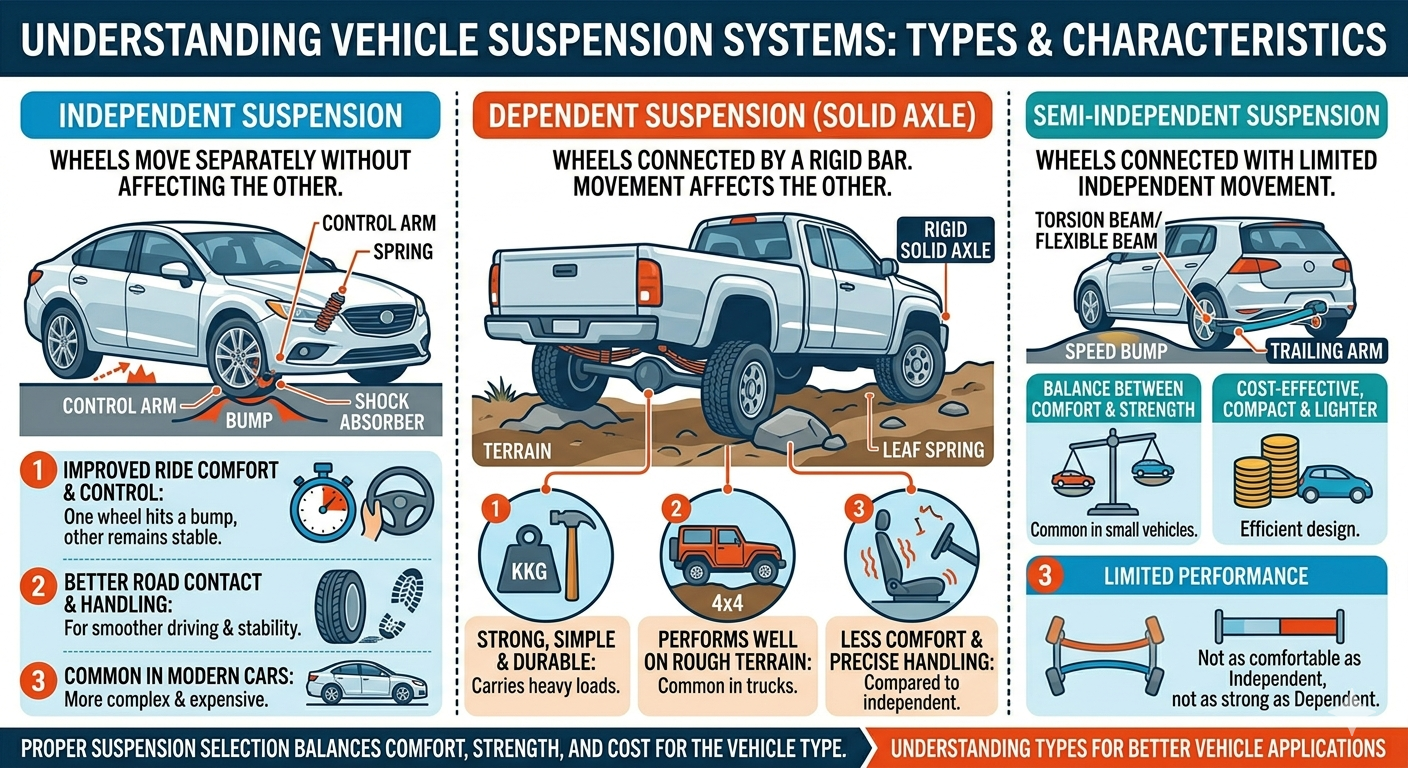
- Independent Suspension:is a system where each wheel on the same axle moves separately without affecting the other. When one wheel hits a bump, the other wheel remains stable, which improves ride comfort and control.This system uses separate components like control arms, springs, and shock absorbers for each wheel, allowing better contact with the road. As a result, it provides smoother driving, improved handling, and better stability during cornering and high-speed movement.It is commonly used in modern cars, but it is more complex and expensive to produce and maintain.
- Dependent Suspension: also called solid axle suspension, connects both wheels on the same axle with a rigid bar. This means movement in one wheel directly affects the other, reducing comfort on uneven roads.However, this system is strong, simple, and durable. It can carry heavy loads and perform well on rough terrain, which is why it is commonly used in trucks and heavy-duty vehicles.Although it is reliable, it offers less comfort and less precise handling compared to independent suspension.
- Semi-Independent Suspension:is a combination of independent and dependent systems. The wheels are connected but still have some ability to move independently.A common design uses a flexible beam that allows limited movement between the wheels. This provides a balance between comfort and strength.It is often used in smaller vehicles because it is cost-effective, compact, and lighter. However, it does not provide as much comfort as independent suspension or as much strength as dependent suspension.