BOJ Policy to Strengthen Yen Seen as Option to Curb Inflation, Minister Says
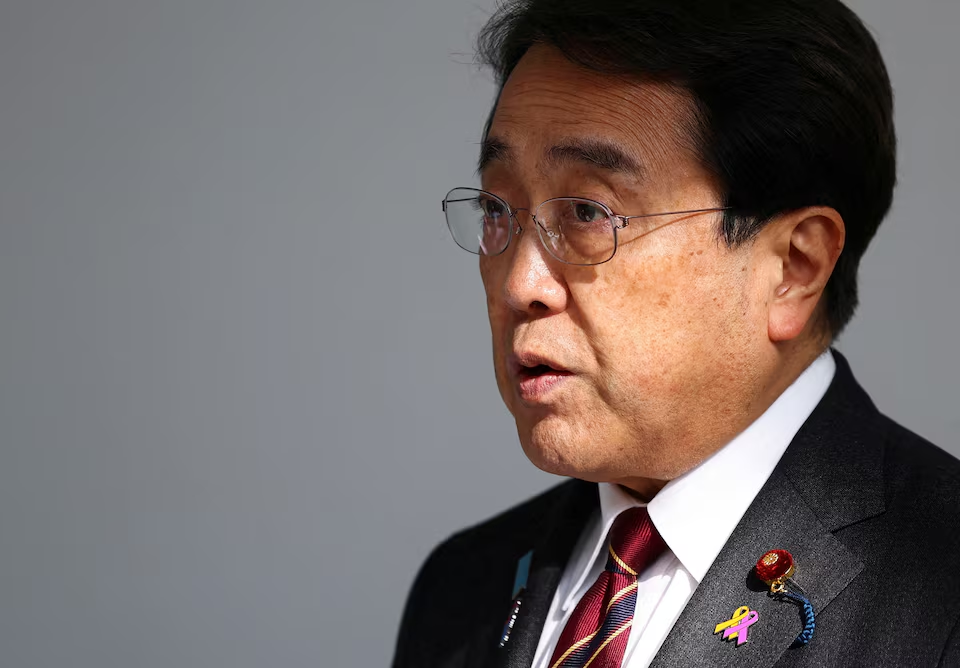
April 2026 — Japan is considering new monetary policy options to tackle rising inflation, with officials suggesting that strengthening the yen could play a key role in stabilizing prices. Japan’s trade minister, Ryosei Akazawa, stated that policy action by the central bank could help boost the value of the yen, which in turn may reduce the cost of imports such as food and energy.
The proposal comes as Japan faces increasing inflationary pressure, largely driven by higher global oil prices and rising import costs. A weaker yen has made essential goods more expensive, adding strain on households and businesses. Economists have suggested that a stronger currency—potentially rising by 10–15%—could ease these pressures by lowering import prices and stabilizing the economy.
The Bank of Japan has already been under pressure to adjust its monetary policy, as inflation approaches its 2% target while real interest rates remain low. Markets are currently anticipating a possible interest rate hike in the coming weeks, as policymakers weigh the risks of prolonged inflation against potential economic slowdown.
However, officials remain cautious due to global uncertainties, particularly geopolitical tensions in the Middle East that have pushed energy prices higher. Policymakers warn that aggressive tightening could risk slowing economic growth, raising concerns about stagflation—a combination of weak growth and rising prices.
The debate highlights a growing challenge for Japan’s policymakers: balancing the need to control inflation while supporting economic recovery. As the situation evolves, the Bank of Japan’s next policy decisions are expected to be closely watched by global markets and investors.
Economic shock of Middle East war to cast shadow over IMF, World Bank meetings
April 2026 — The escalating conflict in the Middle East is expected to dominate discussions at the upcoming meetings of the International Monetary Fund and the World Bank, as global leaders grow increasingly concerned about its economic impact. The war has already triggered volatility in energy markets, with oil prices rising sharply amid fears of supply disruptions, raising concerns about renewed inflationary pressure across both advanced and developing economies.
Finance ministers and central bank officials gathering for the meetings are likely to focus on how the conflict could slow global economic growth at a time when many countries are still recovering from recent economic challenges. Higher fuel and transportation costs are expected to ripple through supply chains, increasing the price of goods and services worldwide. Economists warn that vulnerable economies—particularly those dependent on energy imports—could face severe fiscal strain if the situation continues.
In addition to inflation risks, the conflict has increased uncertainty in global financial markets, with investors becoming more cautious and capital flows showing signs of instability. The International Monetary Fund is expected to assess whether current growth forecasts need to be revised downward, while the World Bank may emphasize the need for financial support to countries most affected by rising costs and economic disruptions.
Policymakers are also expected to discuss coordinated responses, including strategies to stabilize energy markets, support vulnerable populations, and maintain financial stability. However, the situation remains uncertain, and much will depend on how long the conflict persists and whether it expands further.
As global leaders convene, the economic consequences of the Middle East conflict are set to overshadow much of the agenda, highlighting once again how geopolitical tensions can quickly translate into worldwide economic challenges.
Exclusive: Iranian source says US has agreed to unfreeze Iranian funds, Washington denies it
April 2026 — Conflicting claims have emerged over the status of Iranian financial assets, after an Iranian source stated that the United States had agreed to unfreeze billions of dollars in Iranian funds held abroad. However, officials in Washington have strongly denied the report, highlighting ongoing tensions and a lack of clarity in diplomatic communications between the two sides.
According to the Iranian source, the reported agreement was part of broader indirect negotiations aimed at easing economic pressure on Iran and potentially creating space for renewed diplomatic engagement. The funds in question are believed to have been frozen under international sanctions, which have significantly restricted Iran’s access to foreign currency and financial markets.
U.S. officials, however, rejected the claim, stating that no such agreement had been reached and emphasizing that sanctions policies remain unchanged. The denial underscores the continued complexity of relations between the United States and Iran, particularly as both sides navigate sensitive issues related to regional security, nuclear policy, and economic restrictions.
Analysts note that even the suggestion of unfreezing funds could have significant implications, potentially easing economic pressure on Iran while also raising political concerns in Washington and among international allies. At the same time, the contradictory statements highlight the fragile nature of ongoing diplomatic efforts and the challenges of verifying developments in high-stakes negotiations.
As the situation develops, global observers are closely monitoring any signs of progress or further disagreement, as decisions surrounding frozen assets could influence broader geopolitical dynamics and economic conditions in the region.
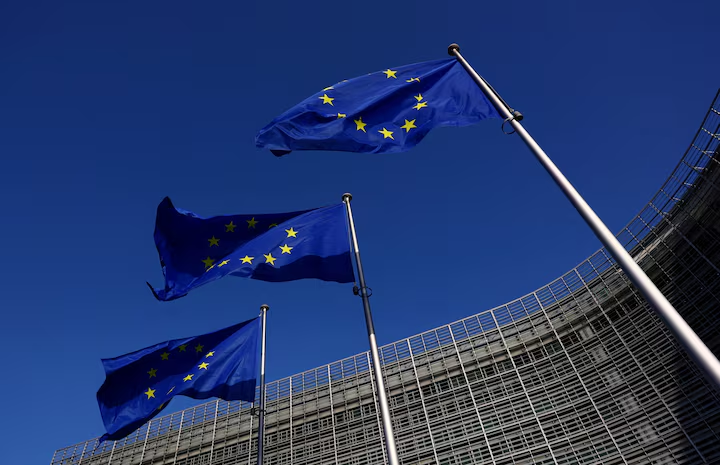
Europe should mobilise pensions for capital markets, Swedish minister says
April 2026 — European countries should make greater use of pension savings to strengthen capital markets and boost economic growth, according to Sweden’s financial markets minister, Niklas Wykman. Speaking at a financial event in Helsinki, Wykman called on European governments to adopt reforms that would allow pension funds to play a more active role in investment across the region.
The proposal comes as the European Union continues efforts to build a unified Capital Markets Union, aimed at reducing companies’ reliance on traditional bank lending and improving access to cross-border financing. Wykman emphasized that without sufficient capital flowing into markets, such integration would have limited impact, stressing that “a union is not worth much if there is no capital in the market.”
He pointed to Nordic countries such as Sweden, Denmark, and Finland, along with the Netherlands, as examples of successful pension systems where contributions are partially invested in financial assets. These “funded” pension systems generate long-term investment capital, helping deepen financial markets and support economic development.
Data cited during the discussion shows a significant imbalance across Europe. Nordic countries and the Netherlands together account for roughly two-thirds of the European Union’s accumulated pension assets, while larger economies such as Germany, France, Italy, and Spain—where pay-as-you-go pension systems dominate—hold a much smaller share.
Wykman urged other European nations to shift toward more funded pension models, arguing that doing so would channel long-term savings into productive investments and strengthen the region’s financial resilience. At the same time, European officials highlighted the urgency of completing financial market integration, warning that delays could leave Europe lagging behind global competitors.